AIKIZI Lab · Woven Wind guide Open Woven Wind

Chapter six

Pile and yarn

How dense and how tall the pile grows, how each thread holds itself, what the yarn is made of, and the light it is seen in.

The pile tab

The pile is knotted onto the cloth in rows. These controls decide how many threads there are and how long they grow.

knotted · flat-wovenWith or without pile. Flat-woven shows only the cloth.
knotsKnots across the width of the rug. More knots, finer detail, more threads to move.40–400
plyStrands in every knot. More ply fills the pile in.1–8
heightHow long the pile grows.0.01–0.4
carveThe motif cuts the pile higher and lower, so the pattern stands out in relief.0–1
detailSegments along each thread. More segments bend more smoothly.6–24

The tab also counts the threads. Above 800,000 it notes “heavy live, fine to export”: the live view may slow down, but pictures and videos still come out right. Choosing a mood, or wild, sets knots back to 220 and ply back to 4.
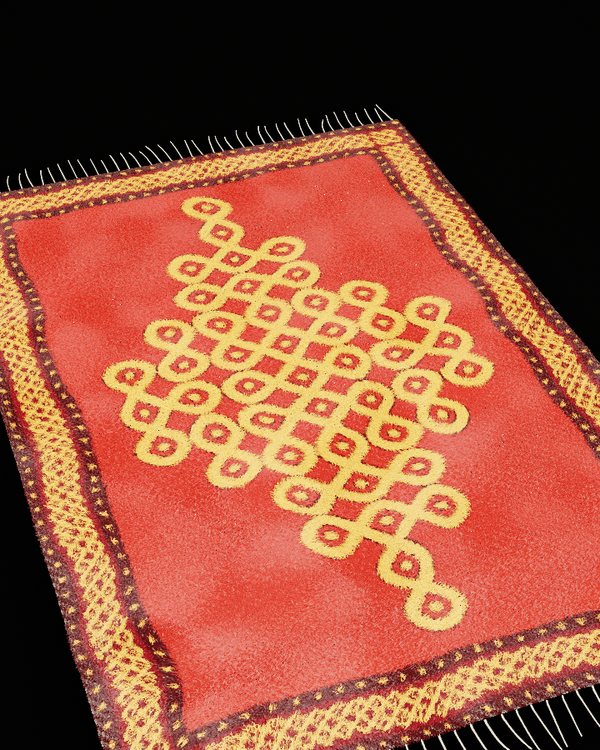
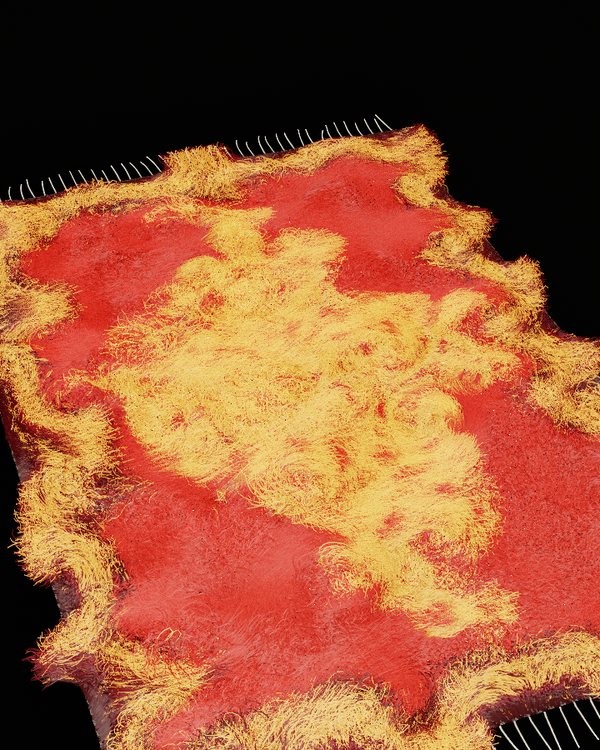
What they doEach pair differs in one control.

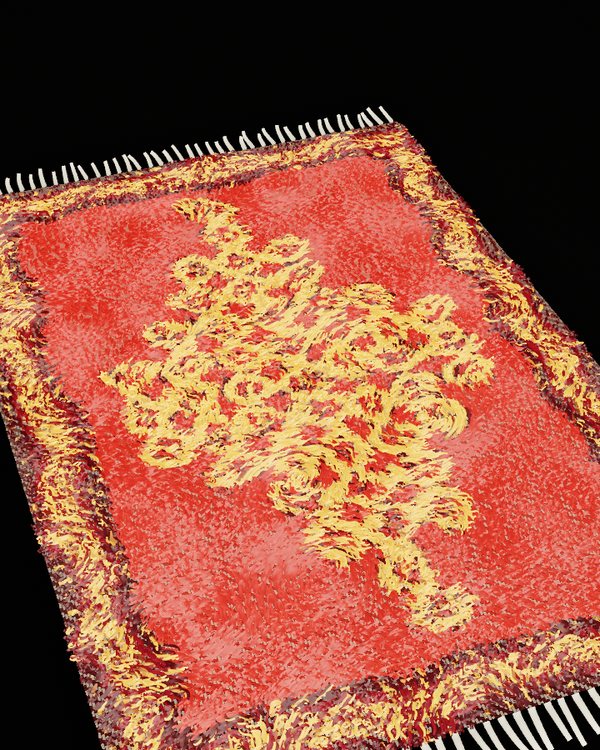
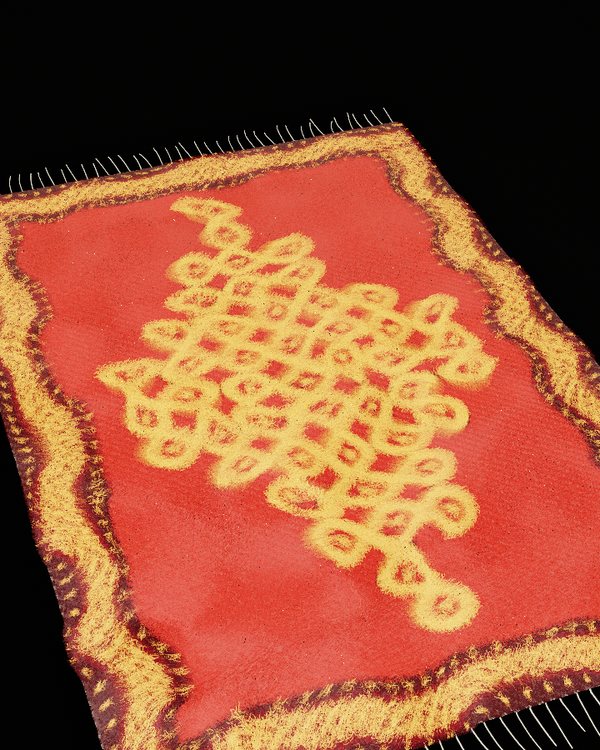
A rug with very short pile; the kolam is crisp
height 0.03short, crisp
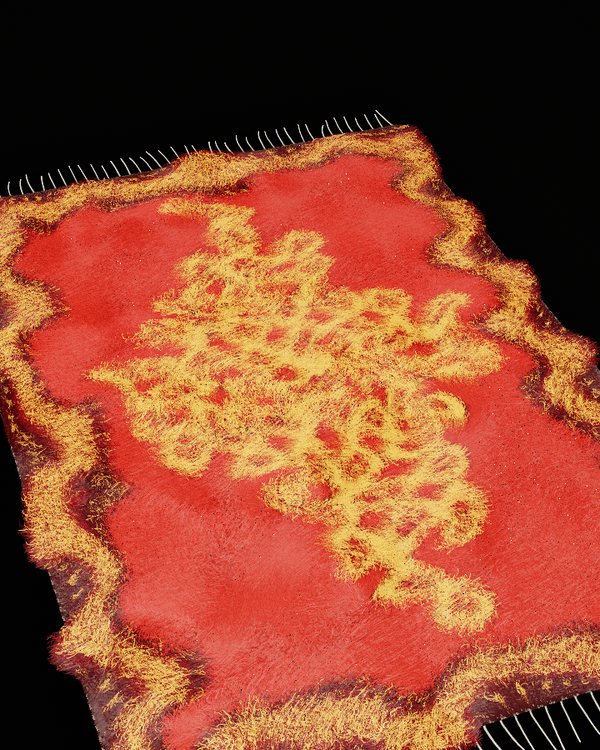
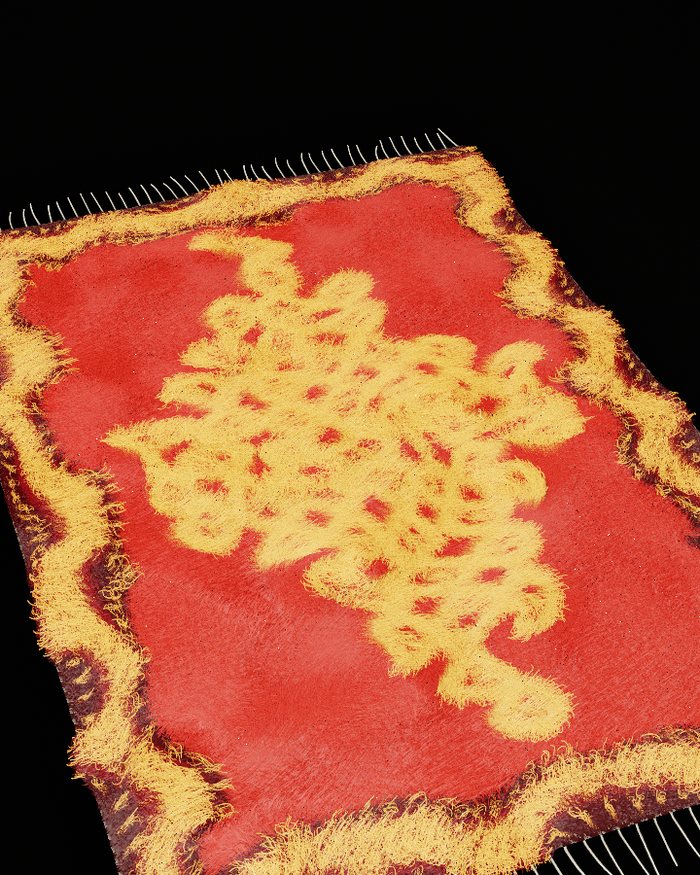
The same rug with long pile; the kolam blurs into shag
height 0.20long shag
A rug with few knots; the cloth shows between sparse tufts
knots 60sparse
A rug with many knots; dense and fine
knots 300dense
A tall-pile rug without carving; the motif is flat
carve 0one height
The same rug carved; the motif stands taller
carve 0.9the motif in relief
A rug with one strand per knot; thin pile
ply 1thin
A rug with eight strands per knot; full pile
ply 8full

How a thread holds itselfBody and nap, in the pile tab.

Body
springHow hard each thread springs back upright.0–1
calmDamping: how soon movement dies away.0–1
anchorExtra stiffness near the knot.0–1
tuftAbove the middle, the threads of one knot lean together; below it, they splay apart.0–1
twistThe yarn’s ply as a curl along each thread.0–1
unrulyThread-to-thread variation in length and lean.0–1
thicknessHow thick each thread is drawn.0.05–1
Nap
leanHow far the pile leans at rest.0–1
directionA dial: which way it leans. 90° points to the near end of the rug.0–359°

Five yarnsIn the light tab.

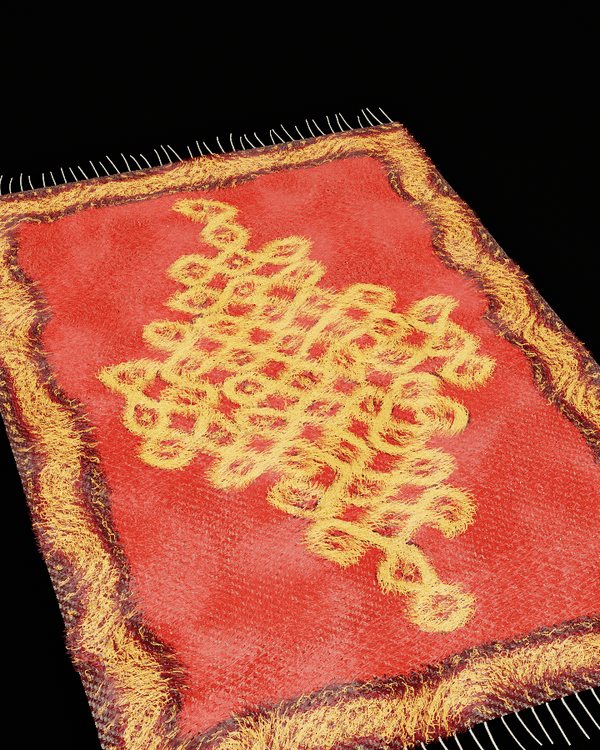
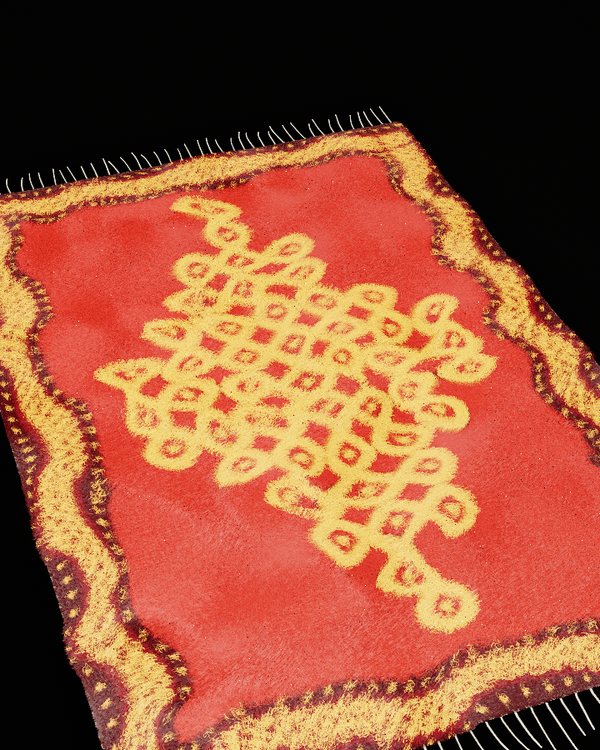
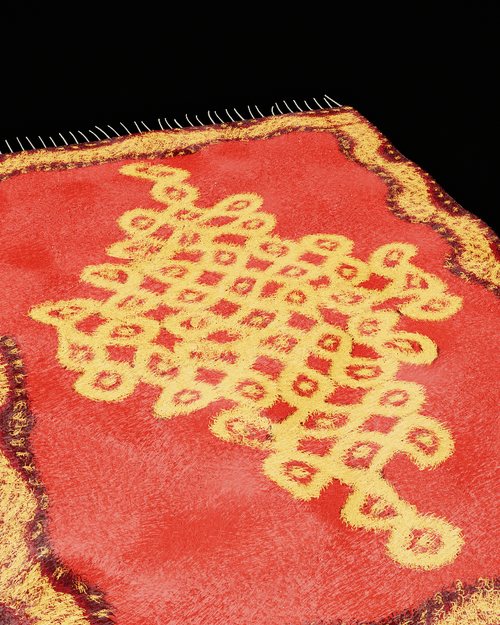
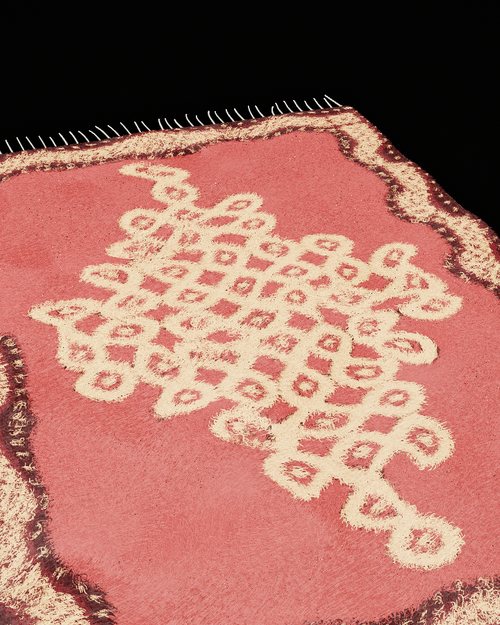
The kolam rug in wool, close up
woolsoft and matte
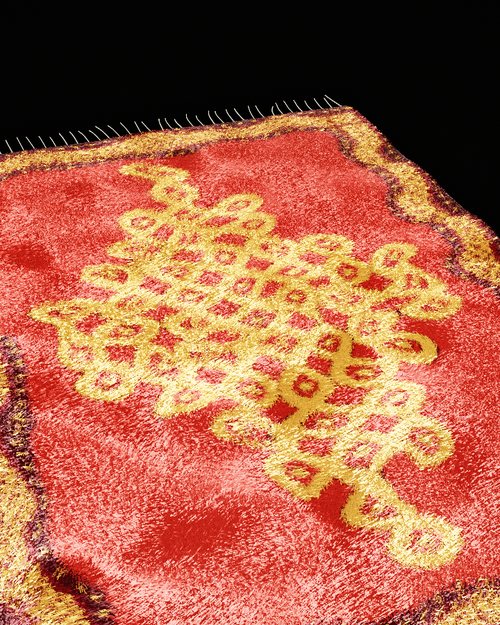
The kolam rug in silk, with bright highlights
silka sharp, bright sheen
The kolam rug in jute, pale and dry
jutecoarse, pale and dry
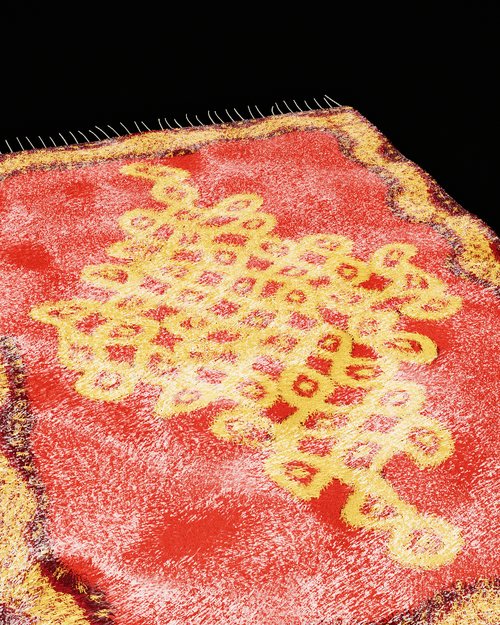
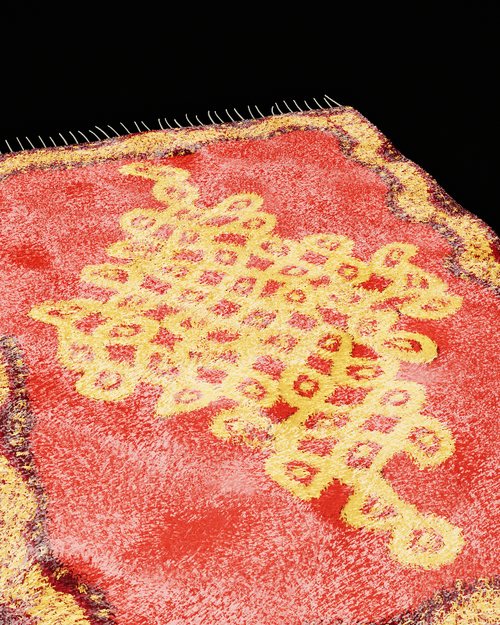
The kolam rug in metallic yarn, with coloured glints
metalliccoloured glints
The kolam rug in velvet, shining with its nap
velvetdark down the pile, pale side-on

The light tab

Yarn
wool … velvetThe five yarns above.
sheenHow strong the yarn’s highlight is.0–1.5
glossHow sharp that highlight is.0–1
sunlit tipsBrightens the last part of each thread.0–1
depthShade deep in the pile, near the knots.0–1
Lamp
fromA dial: the side the light comes from. The shadow falls the other way.0–359°
heightThe light’s angle above the floor. Lower light, longer shadow.5–90°
backlightLight through the threads when you look towards the lamp.0–1
exposureOverall brightness, in stops.−2–2
Room
floorThe colour of the floor and background.
shadowHow dark the rug’s shadow is.0–1
vignetteDarkens towards the corners.0–1
Camera
film · close-ups · soft focusThe camera that films the rug by itself. See chapter seven.
Video
lengthHow long “mp4 from now” records. A loop always lasts one weather loop.5 · 10 · 20 · 30 s
fpsFrames a second, for both kinds of video.30 · 60