AIKIZI Blog: Midjourney Sref, Nano Banana, ElevenLabs Audio, Reading Image Style
Guides to Midjourney style references, Nano Banana prompts and image prices, ElevenLabs voice, music and sound effects, a free browser audio visualizer, and how to read the style of any image.
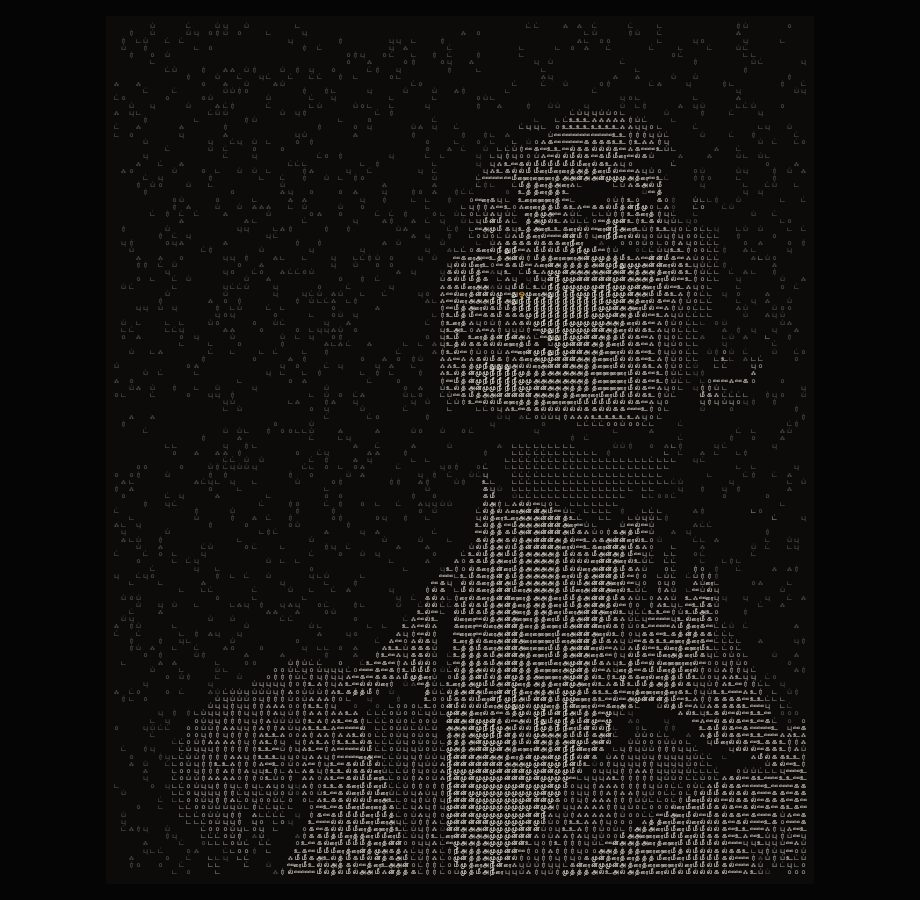
Devanagari and Tamil ASCII Art: A Picture Made of Words
Write a picture in Devanagari with Sanskrit words, or in Tamil, Latin or symbols. Every letter stays whole with its vowel signs; save a PNG, an SVG or a video.
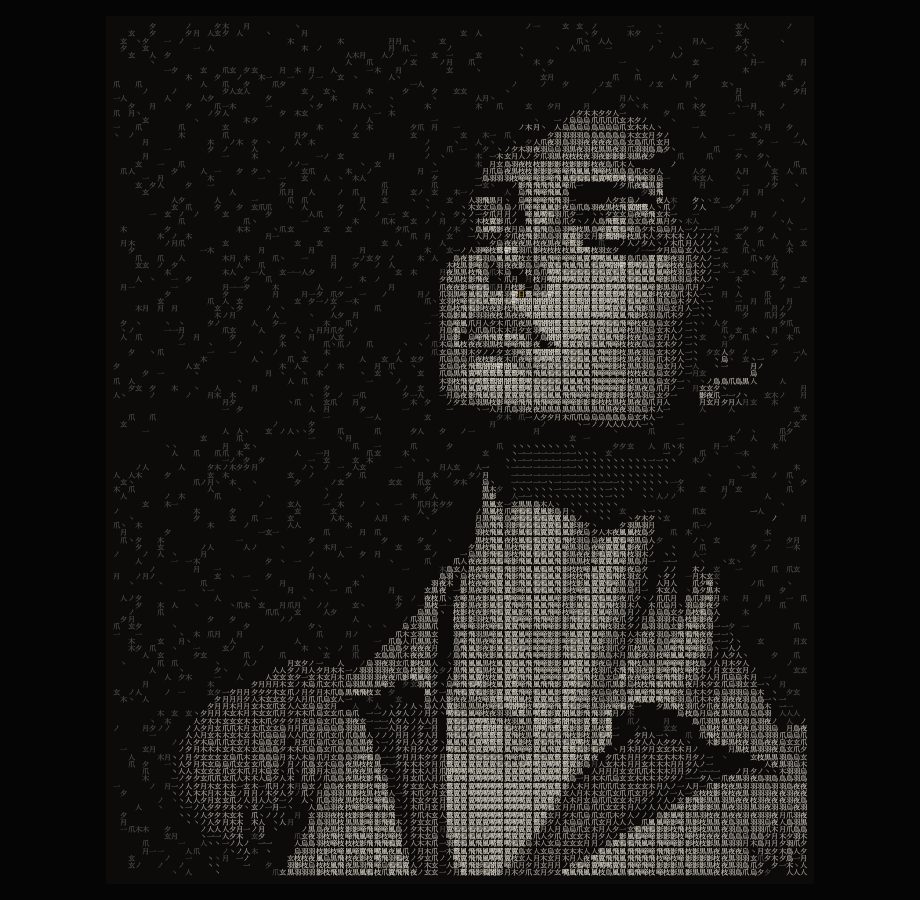
Kanji ASCII Art: Write a Picture in Kanji, Save as SVG
Kanji ASCII art writes a picture in Japanese characters picked by their ink. Make one in your browser, vertical too, and save an SVG with live text or a PNG.
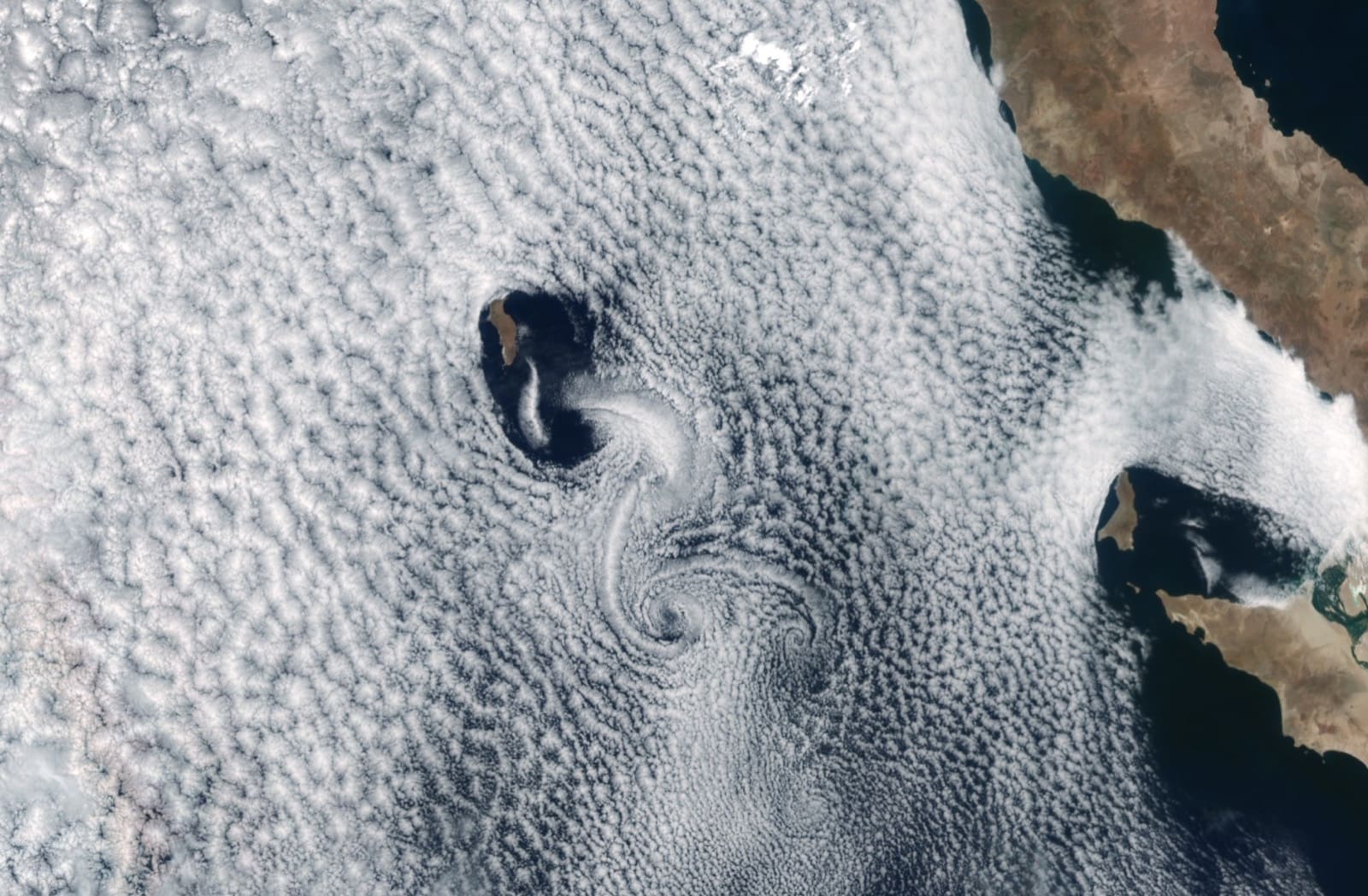
What is a von Kármán vortex street (and how to make one in your browser)
A von Kármán vortex street is the double row of eddies a flow sheds behind an island or a post: why it forms, Re and St, and how to make one free in 4K.
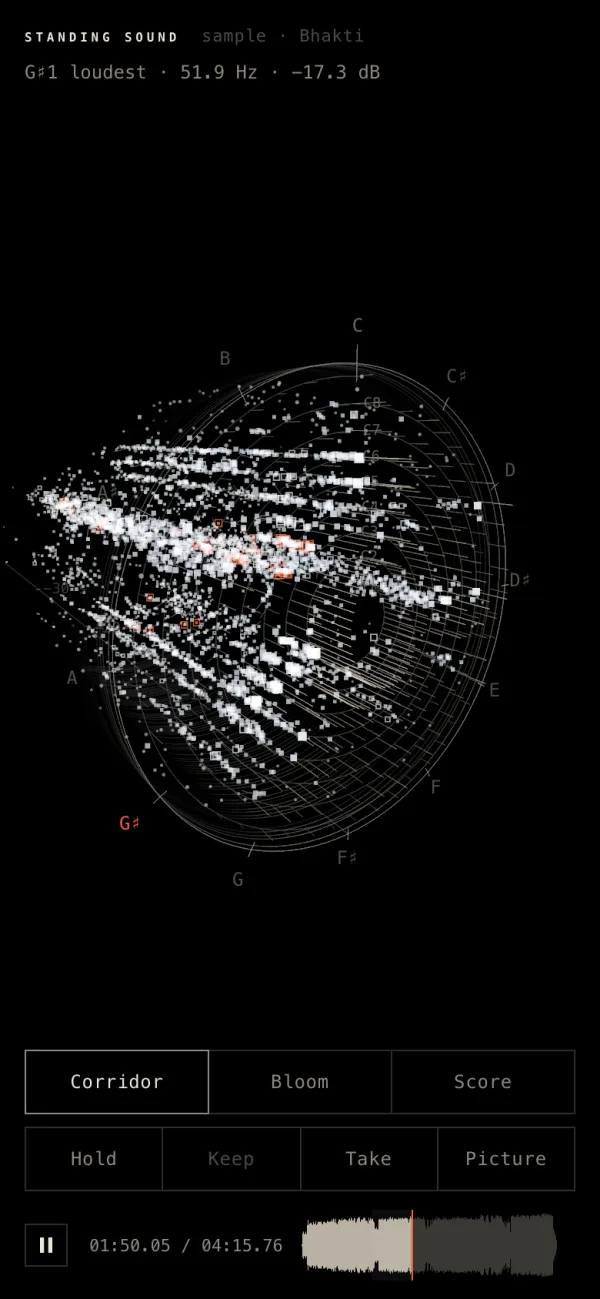
3D Music Visualizer on Your Phone: iPhone and Android, Free
Use Standing Sound on your phone: play a song in 3D, hold it, touch a point to hear it, and record a 1080 × 1920 video for Reels. Free, no app, no sign-in.
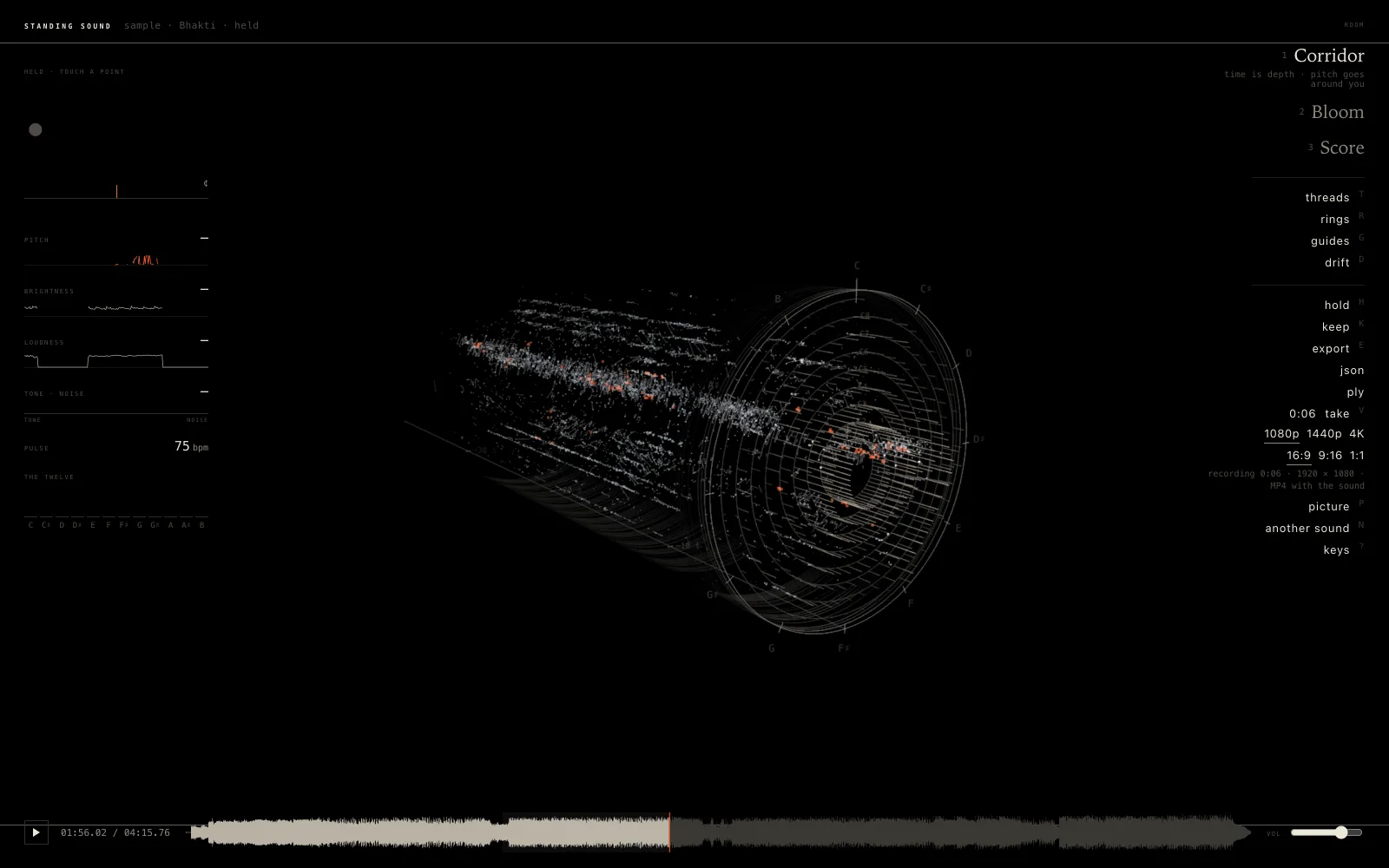
Free Music Visualizer Video Maker: 4K MP4 for Reels
Record a music visualizer video in your browser: 1080p, 1440p or 4K, 16:9 for YouTube or 9:16 for Reels. An MP4 with the sound, free, no sign-in, no watermark.
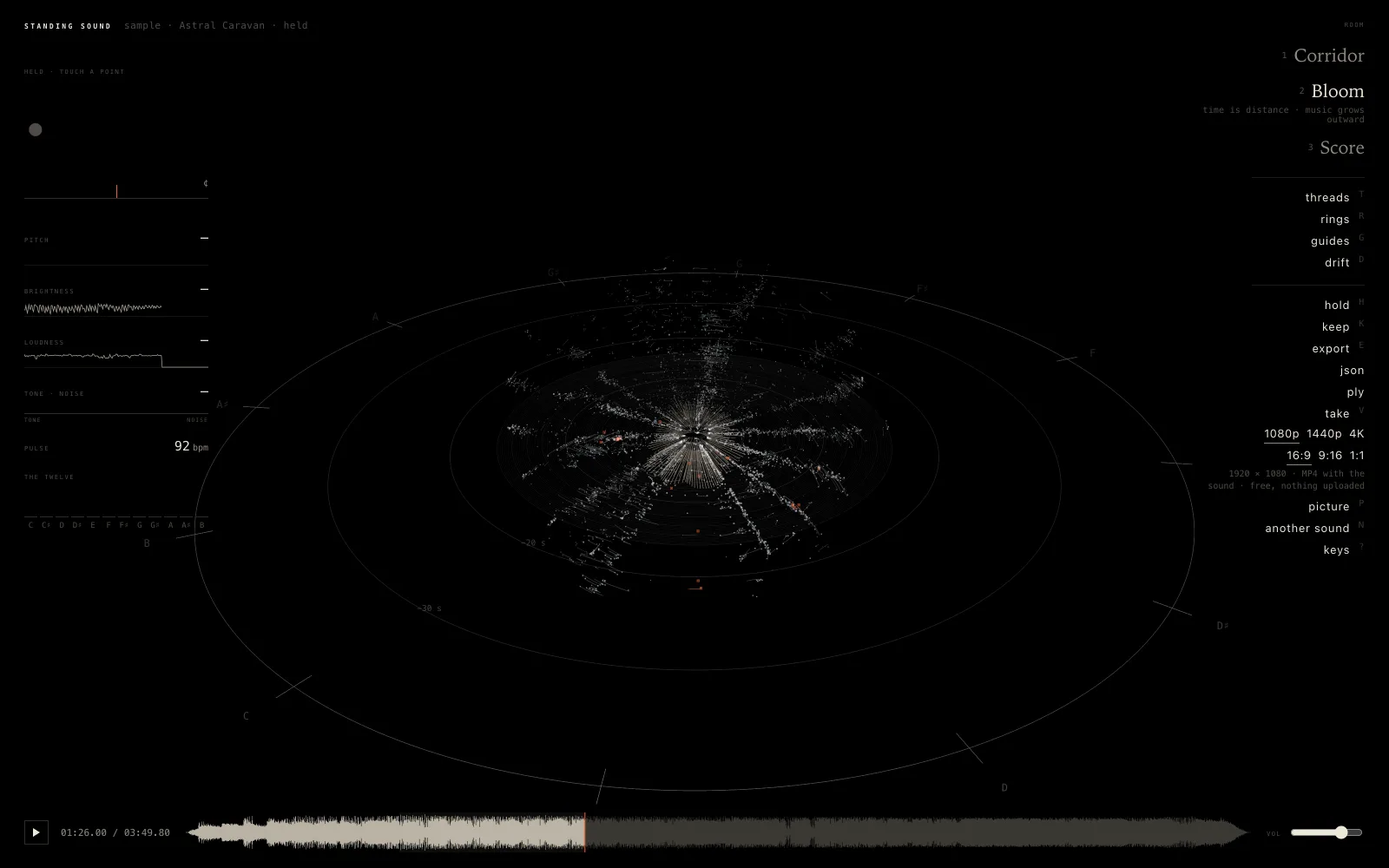
How Sound Looks in 3D: Pitch, Partials and Beats
What a sound is made of, seen in 3D: the fundamental frequency, partials and harmonics, noise, pitch class, beats, brightness and tempo, measured and drawn.
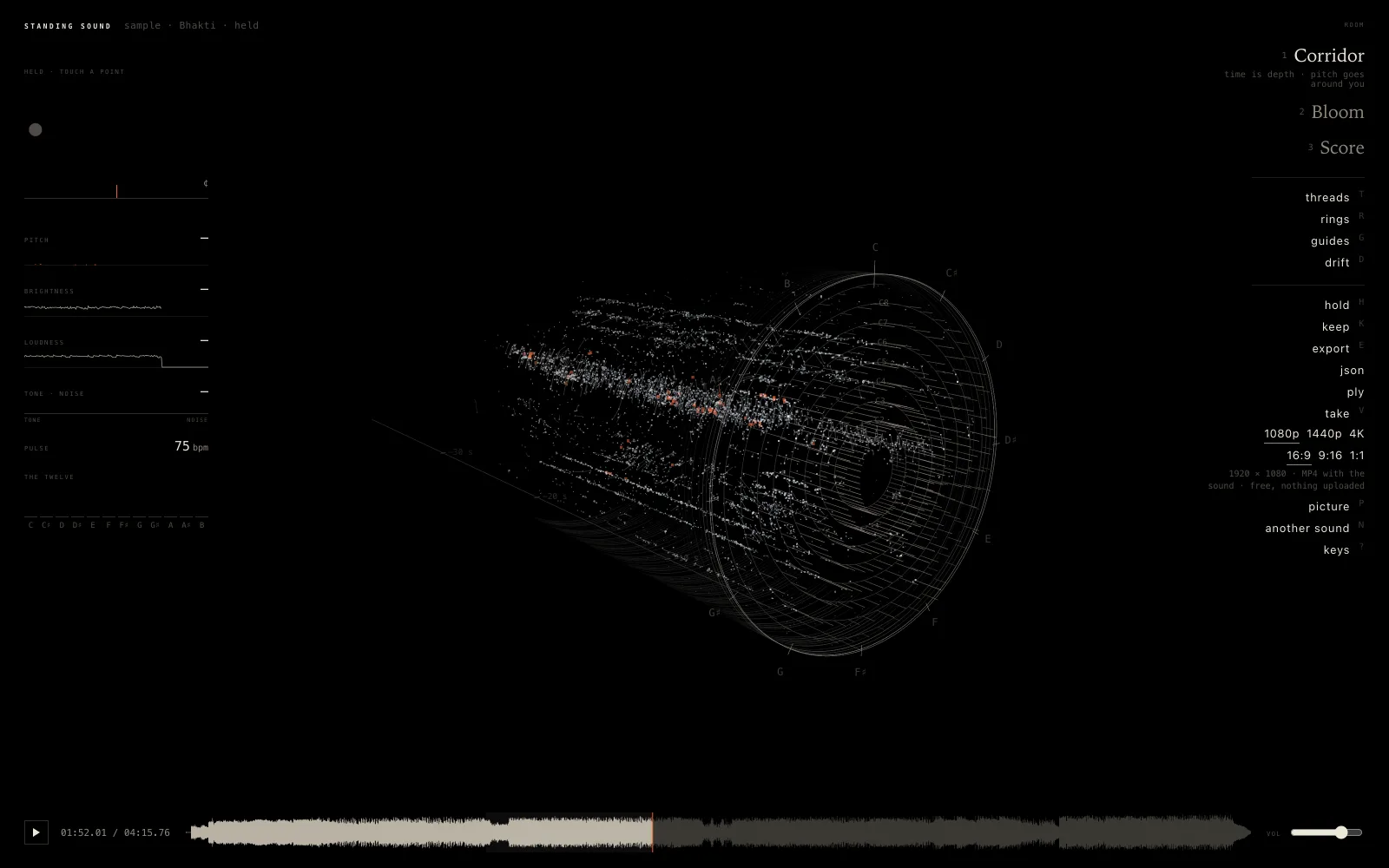
Free 3D Music Visualizer Online: 4K Video, No Sign-In
A free 3D music visualizer in your browser: a song, the microphone or a tab set down as notes, partials and beats. Record a 4K MP4 with the sound, no sign-in.
What a small decision model sees in a blurred picture: building Prompt Guess with Jev and Claude Haiku 5.5
How we raced TypeSafe's Jev and Claude Haiku 5.5 live on blurred pictures: fair rounds, one Worker request per round, latency, cost and a shared clock.
Prompt Guess: a free game where you race two AIs to read a picture
A blurred picture sharpens in five steps. Pick its true prompt line before Jev and Claude Haiku 5.5 do. Ten pictures a game; your first game is free and needs no account.
Nano Banana 2.1, tested: 15 pictures, the prompts and the price
Google's Nano Banana 2.1 wrote a Tamil shop sign correctly on the first try. Fifteen test pictures at 2K, the prompts behind them, the price, and where it still slips.
AI voice acting with Eleven v4: hear SAAKSHE’s words change
Hear the same character dialogue performed four ways. Explore real Eleven v4 audio, copy the exact tags, and direct your own scene in AIKIZI.
The best size for AI art prints, in centimetres
1K, 2K and 4K in print sizes at 300 and 200 dpi, what each costs in credits, why aspect ratio comes before size, and the 23-credit route to a print of the picture you actually chose.
Recreate the style of a photo with AI
Attach the photograph as a style reference and the model takes its palette, light and surface onto your own subject. One kitchen photo's look moved onto a pair of boots, plus when to decode it into words instead.
Writing prompts for Nano Banana 2
The five-pass prompt shape, and what changes on the cheaper Gemini model: it follows fine material detail better than Nano Banana Pro and directs light worse. Four habits that suit it.
Nano Banana Pro at 4K: 24 credits, and when to spend them
What 4K costs against 1K and 2K, what the extra pixels actually resolve, how big it prints, and why a 4K generation gives you a different picture rather than a bigger one.
Generating an AI image from a moodboard: the majority wins
Four style references, two warm and two cold — and the cold pair left no trace. Why a moodboard is not averaged, how many pictures to use, and when naming hex codes beats uploading.
Copy the colour palette of one image into a new generation
Decode the source for 3 credits, take its five hex codes, and assign each one to a part of your picture. A palette moved from an engraved portrait onto a glass of water, and why hex beats colour words.
Telling an AI what each reference picture is for
Character, style, object, scene, pose and lighting — the six roles, the exact sentence each writes into your prompt, and why an unlabelled reference behaves unpredictably.
A Midjourney sref alternative: upload the picture, not a code
Style codes are locked to one tool and cannot be read. An uploaded style reference does the same job portably, costs nothing extra, and decodes into words. One prompt run with none and with three.
A character turnaround sheet with AI: three angles, 24 credits
Front and profile of one character made from a single master reference. The method, what a sheet costs with discards, and the three things that break one — starting with the lighting.
Consistent product photos with AI: one pack shot, many settings
A stoneware mug moved from a studio sweep to a kitchen counter for 8 credits, keeping its glaze, speckle, cobalt band and handle. The Object role, what it holds, and what a catalogue costs in credits.
Re-pose a character with AI, without changing the face
One master portrait, the Character role, and a sentence of new direction. 8 credits a pose. What survives a re-pose, what vanishes, and why the badge on the reference decides it.
AI upscale to 4K: 15 credits, and it keeps your picture
Upscaling keeps the composition; regenerating at 4K makes a different picture. Both run on the same image, the cheapest route to a large print, and what 4K measures in centimetres.
Convert a Midjourney prompt for Nano Banana Pro
Drop the parameters, move the aspect ratio to the setting, and expand the noun phrase into four ordered passes. A worked conversion, and the shortcut if you still have the picture.
Nano Banana Pro text in image: a real test, first attempt
A two-line shop sign generated at 1K for 8 credits, every letter correct. How to write a prompt whose text survives, which model to use, and the limits worth knowing.
An AI image generator where you upload the style reference
Upload a picture, badge it as a style reference, and the generator takes its light, palette and surface onto your subject. One prompt run with none and with three, and the six roles an upload can have.
Character consistency in an AI image generator: what holds and what vanishes
One master portrait and the Character role keep a face, hair, age and wardrobe across generations. Scars, moles and tattoos do not survive. The sentence that makes a reference stick, and four habits that fix the rest.
Nano Banana Pro vs Midjourney: which to pay for
One sells pictures by the credit, the other sells GPU time by the month. Where Midjourney is plainly better, where Nano Banana Pro is, and what happened when we carried one picture across.
Nano Banana Pro price per image: 8, 16 and 24 credits
What one Nano Banana Pro picture costs on aikizi in credits and in cents, against Google's published API rate, plus why a per-image comparison with Midjourney cannot honestly be made.
How many AI images do you get for $20 a month?
$20 on aikizi is 540 credits: 33 images at 2K on Nano Banana Pro, 67 at 1K, 135 on Nano Banana 2. The full division, what $8 buys, and a real 55-credit set with its bill.
Eleven v4: voices that act, not read
Write expressive Eleven v4 speech with audio tags, choose a voice and make your first clip in AIKIZI Studio. 20 free audio minutes daily this season.
Eleven Music: a track from a sentence
Prompting ElevenLabs Eleven Music (v2.5): decide genre, mood, instruments, tempo and era, narrate the arrangement, add lyrics or go instrumental. A worked 60-second brief you can run free in AIKIZI Studio.
Sound effects from a sentence
How to describe a sound so ElevenLabs makes the one your scene needs: source, space, motion; seconds and loops; a night-street scene in six takes. Free in AIKIZI Studio, 20 minutes a day.
A voice for your decoded character
From a decoded picture to a spoken line, a sound bed and a minute of music: read MOOD and WORLD as a casting note, pick an ElevenLabs voice, write three lines, build the room. About two of your twenty free minutes.
How to Identify an Art Style From an Image
Learn how to read medium, era, composition, palette, texture, and mood—then turn those clues into an accurate, reusable style description.
How to Turn Any Image Into an AI Prompt
A practical image-to-prompt workflow for extracting subject, composition, lighting, palette, materials, and style without copying blindly.
Reverse Prompt Engineering: Recreate the Look, Not the Subject
Learn ethical reverse prompt engineering: isolate a reference image’s visual rules, replace its identity, and build an original style system.
How to Analyze Composition, Lighting, Color, and Materials
A four-lens framework for reading any image clearly—from spatial structure and light direction to palette roles and surface behavior.
How to Keep a Consistent AI Art Style Across Midjourney, Gemini, and ChatGPT
Build one portable style contract, adapt it to each image model, and evaluate outputs with the same visual rubric for a coherent series.
Image-to-Prompt vs Style Reference: Which Should You Use?
Compare image-to-prompt analysis and style references, understand their tradeoffs, and combine both for faster, more controllable AI art.
Free Color Palette Extractor From an Image: Beyond HEX Codes
Extract a five-color palette locally in your browser, understand dominant and accent roles, test harmony, and export usable design tokens.
How to Use Style References (--sref) in Midjourney V8.1
Two ways to pass a style reference in Midjourney V8.1 — image URLs and numeric --sref codes — plus --sw, --sv, stacking, and three real decoded V8.1 prompts.
Sref vs Cref vs Iref in Midjourney V8.1, Explained
Sref vs cref vs iref in Midjourney V8.1: --sref copies style, --cref is a legacy character flag, iref is an image prompt. What runs in V8.1, with real prompts.
Best Midjourney Sref Codes 2026: Eight Free Codes, and How Sref Works
How --sref, --sw and --sv behave in Midjourney V8.1, how to use a style reference step by step, and seven real V8.1 styles whose codes unlock on their decode pages.
Midjourney --sw (Style Weight) in V8.1: Range, Defaults & Real Examples
How Midjourney's --sw style weight works in V8.1: the 0-1000 range, the default of 100, what 300 vs 500 changes, and --sw vs --stylize, with real prompts.
Glitch Art: Free Online Guide
Make glitch art, pixel sorting and databending effects for free online. AIKIZI Lab has 3 glitch tools with before and after examples.
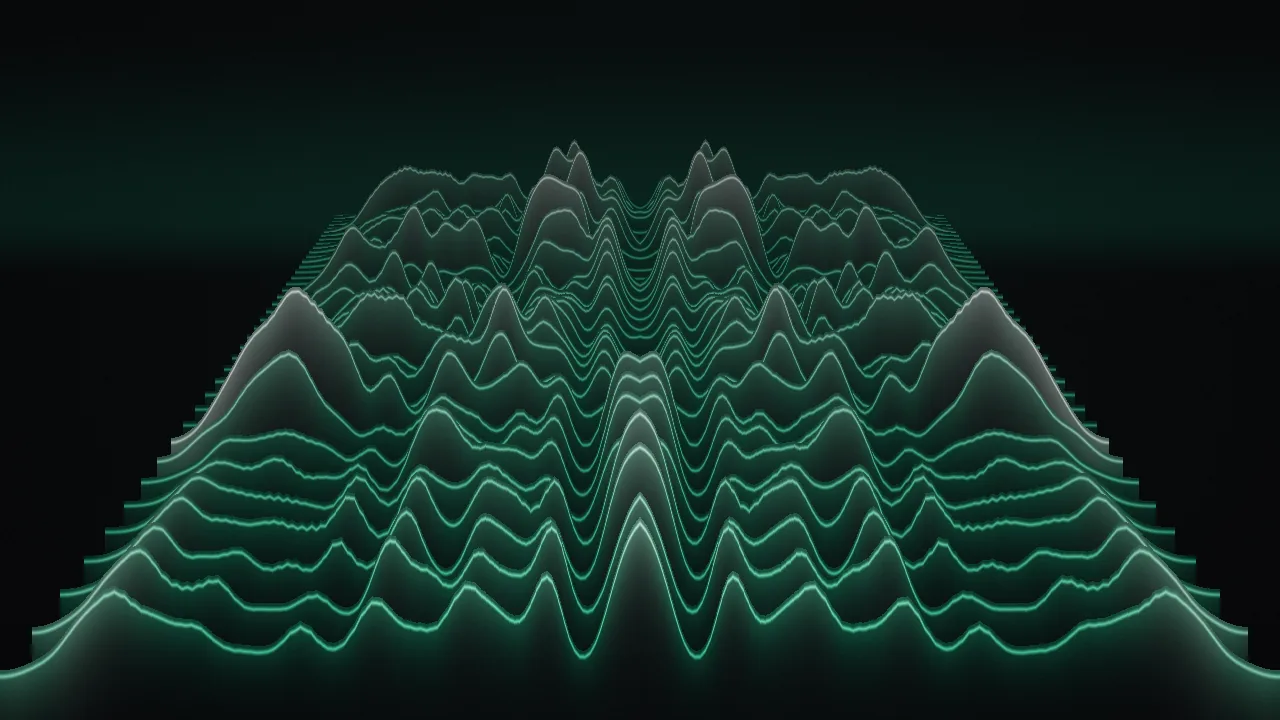
Free Online Audio Visualizer: Ten Ways to See a Song, Saved as Video
Ten free audio visualizers that run in your browser: bars, wave, spectrum, particles, spectrogram and more. Save a 1080p or 4K MP4 with your song and no watermark.
Perlin Noise Generator Guide
Generate Perlin, Simplex and Worley noise textures for free. AIKIZI Lab noise generator with octaves, lacunarity and seamless tiling. Export PNG.
CSS Gradient Generators 2026
The 5 best free CSS gradient generators compared. AIKIZI Gradient Studio offers 10 types including mesh, noise and spiral. Create mesh gradients, export CSS and PNG.
Vitrine of Impossible Materials
A museum exhibition of impossible materials that AI creates but reality cannot. Six specimens with AIKIZI Decode material analysis revealing surface contradictions invisible to Midjourney prompts and style codes.
33 Dimensions Pinned
Walk through seven decode dimensions that read what prompts cannot name. Materials, color systems, mood recipes, cultural DNA, construction methods, lighting rigs, and internal tensions. Each pinned with a specimen image.
Apothecary of Moods
Six bottled mood recipes decoded from AI-generated images. Each mood disassembled into its visual ingredients: lighting, palette, scale, texture. The formulas that prompt words cannot express.
Creations: AI Image Studio
Three generation models, ten aspect ratios, 1K to 4K resolution, reference image support, and the decode-to-creation loop. How AIKIZI Studio turns image analysis into new creative work with Midjourney-level control.
Realms: Curated AI Templates
87 published transformation templates that convert any image into a new visual language. Copper sculptures, pixel art portraits, viewpoint shifts, brand-neutral renders, and more. Upload, pick a realm, transform.
The Lineup: Style Identification
Five AI portraits all tagged neo-noir. Same dark palettes, same stoic expressions, same aesthetic feed. AIKIZI Decode reveals their hidden DNA: Tenebrism, Japanese manga, Italian Renaissance, North African textile, and Greco-Roman sculpture. The surface matches. The genetics never do.
Crime Scene: Prompt Engineering
One AI image. 120+ decoded attributes. Seven forensic exhibits. Materials identified, lighting triangulated, cultural DNA traced, emotional architecture mapped, and a Midjourney-ready prompt reconstructed from the evidence. This is image forensics.
What Decode Actually Sees
Decode gives you over a hundred fields of structured data from a single image. Here is what that looks like across twelve real examples.
The Ink Spectrum: How AI Reads Line, Texture, and Silence in Illustration
From neo-engraving crosshatching to ink minimalism negative space — three illustration styles decoded by AI reveal how line weight, texture, and empty space create different emotional registers.
The Anatomy of an AI Art Style: How Style DNA Actually Works
Every image carries invisible creative DNA. Style DNA is the layered system of aesthetic decisions that defines a visual identity. Here is how AI reads it, with real examples from AIKIZI Style Decode.
Midjourney Sref Codes Explained: How --sref Works (2026)
What a Midjourney --sref code is, how --sv decides whether a code resolves, and how to keep a style when codes stop working. Updated October 2026 for V8.
New articles delivered to your inbox
No spam. Unsubscribe anytime.